tfmindustrial.com
  • Home
  • Industry
  • about
  • Contact
Home - Archives for Tyron - Page 3
Author

Tyron

Avatar photo
Tyron

Tyron Denson works in manufacturing and has extensive executive experience in manufacturing marketing events. He has also written a number of personal blogs about manufacturing marketing.

industry

The Various Types Of Industrial Labeling Machines

by Tyron June 11, 2021
written by Tyron

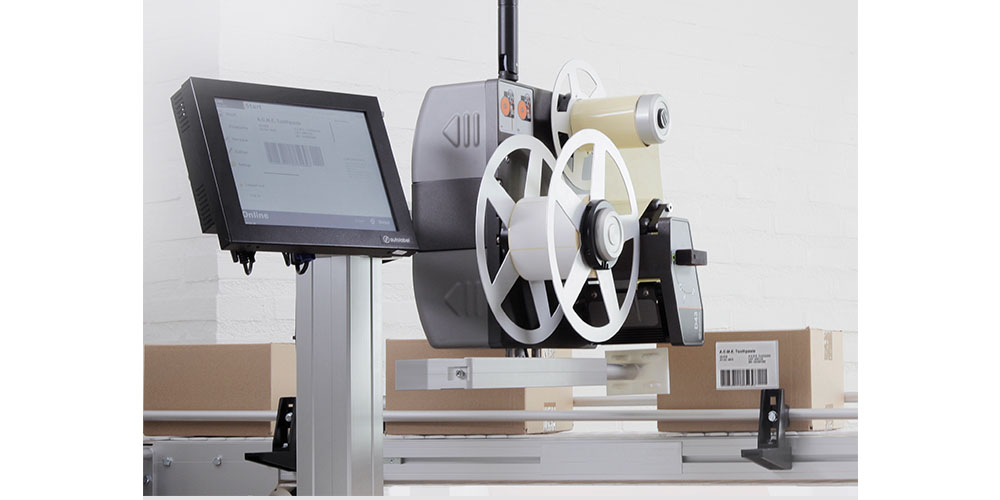
The market is swarmed with a wide range of automatic labeling machines. Before you consider purchasing an industrial labeling machine, you should know several types on the market. Therefore, it would be wise to understand the available types and how they work to make an informed decision. In this post, we look at the automatic labeling machine types.

Types of automatic labeling machines

Some most common types of automatic labeling machines are;

1. Horizontal wrap labeling machines

This is a type of industrial labeling machine that is used to label containers or items. It is an ideal choice for somewhat unstable and round containers or items. The machine is built to apply pressure-sensitive labels which cannot convey upright onto the conveyor. In this type of machine, you place your product on a horizontal roller that runs it through the wrap station, hence the name horizontal wrap labeling machine. This type of automatic labeler is mostly used by contract packagers or manufacturers serving industries like biotech, personal care, and cosmetics.

2. Vertical wrap automatic labelers

This is a very common automatic labeling machine used in various industries. It is applied for a wide range of slightly tapered, rectangular, or stable squared products. It typically dispenses pressure-sensitive labels with the highest accuracy label. It comes with some incredible features like a stepper motor drive and an auto speed adjustment feature. This industrial labeling machine also provides for partial and full labels. This is one reason why it is highly popular as it can be used for various purposes.

3. Front and back industrial labeling machines

As the name suggests, these machines are used to place labels on one or two sides of a product. In some cases, it can be used for making modifications to the labels. It is designed to accommodate various flat-sided or oval containers. If you want to reduce the labeling downtime to zero, these machines allow you to add a third or fourth applicator. However, you must understand that this machine is only ideal for containers, bottles, or stable products. The stability of the products will keep them from tripping when being transported to conveyors.

4. Top labeling machines

Also known as top labelers, these machines are arguably the most versatile of all the industrial labeling machines. They can be used to label a wide range of products in varying industries like electronics and pharmacology. The devices are also very simple to operate. All you have to do is place the panel on top of the passing product. The result is a fine and high-quality label on the item.

5. Top and bottom labeling machines

These machines are highly applied in labeling containers and products that need labels at the top and bottom. This is done simultaneously, hence taking a short time. They can be applied in various industries and products like cases, cartons, and bottles.

Final word

The items listed above are a drop in the ocean compared to all the industrial labeling machines on the market. Other popular types are print and apply labelers and custom labeling applicators. The various industrial labeling machines can also be categorized based on the form of application.
June 11, 2021 0 comment
0 FacebookTwitterPinterestEmail
industry

Why You Need To Manufacture With 3D Printing

by Tyron May 7, 2021
written by Tyron

3D printing is an affordable process used in the creation of parts by companies. It helps save time, and the costs that come with using several machines to create parts are reduced. These 3D printers could be organized and allowed to handle the job. You could use it in the absence of operators all through the process of producing parts. More details are made available when you visit the website.

Keep reading this guide to find out the reasons why manufacturers should stick to 3D printing.

Advantages of 3D Printing

3D printing grants one several advantages when compared to other manufacturing methods. It has advantages related to cost, time, and design. There are even more advantages. Here are some of them.

1. Flexible Design

3D printing lets one print and design complex things using methods that are better than traditional manufacturing. There are traditional processes that have restrictions in designs that don’t use 3D Printing

2. Fast Prototyping

3D printing aids in manufacturing parts rapidly, which ends up increasing the speed of the prototype process. This lets all stages complete faster. When you compare this to other machine prototypes, you will find out that 3D printing is quite affordable. It is also faster in parts creation because your parts would be ready in hours. This allows you to modify the design, and you complete everything at efficient rates.

3. Print on Demand

Using 3D printing, you could print on demand. This needs little space, unlike traditional processes used for manufacturing that needs a lot of space. This helps in saving costs and space, as you don’t need to print a lot unless it’s the number you desire.

3D files used for design are stored at virtual libraries. They are all printed using 3D models, which could be either STL or CAD files. This means they could be printed and located whenever they are needed. There are edits used to designs that could be made at affordable costs. These are done by editing the files without wasting date inventories and investing in tools.

4. Fast Production and Design

This depends on the complexity and design of the part. 3D printing helps in printing objects with speeds in hours. These are faster than machined parts or those that are molded. Time savings is offered through 3D printing; the design process with 3D printing occurs very fast by quickly creating CAD or STL files that get printed.

5. Aids in Reducing Waste

The parts of the 3D printer used in production need the materials that the part would use. It doesn’t waste parts when you compare it to traditional manufacturing methods. Those end up cutting large chunks of materials that cannot be recycled. This process saves these resources and reduces the number of funds spent on obtaining those materials used to create the parts.

Conclusion

In all, purchasing 3D printing equipment might be expensive, but outsourcing your entire project to a reliable 3D printing company could save you a lot. You get to have your products created with speed, accuracy and you don’t risk losing a lot of non-recyclable parts.

May 7, 2021 0 comment
0 FacebookTwitterPinterestEmail
industry

What are the various Stages Involved in Rock Crushing?

by Tyron April 21, 2021
written by Tyron

Tractor stone crushers are vital equipment used in rock crushing. Thankfully, many reputable industries are offering high-quality Tractor stone crushers for sale thereby making life easy for many contractors.

These tractors are highly mechanized and used for crushing stones into small bits. It is mostly used by construction companies to process gravel, sand, rocks, minerals, and other similar products.

It’s perfectly normal to have some questions when you are just starting out in the industry.

This article aims to provide answers to some of those questions so let’s get on with it.

A step by step Guide on the Basic phases of Rock Crushing

There are various phases in rock crushing also known as stations. These various stages exist because passing material through one stage alone may not be enough to crush the rock down to a desired shape and size.

· Primary Crushing

This phase comes before every other phase in the Crushing process. It breaks down materials into units that can be worked on in the secondary crushing process. Normally, the lowest setting for crushers used on the primary process is about 4-6 inches. Could be a little less or a little more.

Some examples of primary crushers include gyratory crushers, Compression-style jaw, and impact crushers. In some cases, there may be an overlap of function between the secondary and primary crushers.

· Secondary Crushing

This follows after primary crushing and is done when further reduction is a necessity. The amount of reduction that takes place in this stage depends on how fine you want your finished product to appear.

The Cone, although can serve as a primary crusher is commonly categorized as a secondary crusher. This is because of their flexibility as regards speed, feed, throw and setting.

However, making use of cone crushers demand that you maintain a constant chocked setting. This is the only way to ensure high productivity.

· Final Reduction Crushing

While Tertiary Crushing is the third reduction crushing, Quaternary Crushing is the fourth reduction crushing. The aim of these two processes including the Final reduction crushing is to reduce the size of a material to the approved market size.

Just like in primary and secondary crushing, these stages may overlap and equipment used for one might also be suitable for the other. Some examples of crushers used for the Final reduction process include; horizontal impact crushers and vertical shaft impact crushers.

Types of Rocks

One of the most important factors that determine how many stages of crushing a rock will undergo is the type of rock used for the project.

The most commonly used materials in industries today include limestone, granite, sandstone, and gravel. These rocks differ in a lot of ways. While some are harder, others might not need to undergo all the stages of rock reduction.

The type of rock chosen for a project will determine what your overall setup will look like. The more knowledgeable you are about the rock mapped out for a project, the less difficult it would be to make a choice of the perfect crusher.

Conclusion

Do not forget that for a rock crusher to function maximally, it needs to coordinate perfectly with other equipment. This other equipment could be the conveyor system, the screens, or even the washing unit.

April 21, 2021 0 comment
0 FacebookTwitterPinterestEmail
industry

Difference between CNC Milling and CNC Turning

by Tyron April 12, 2021
written by Tyron

Although CNC Milling and CNC Turning invariably result in the same thing, both processes are different in a lot of ways.

It is common for most customers to use CNC Machining services while addressing this concept. But very few of them are aware of the difference.

Both of them use pre-programmed computer software to direct the cutting process. But every machinist must be able to tell the differences between these two processes.

What is CNC Milling?

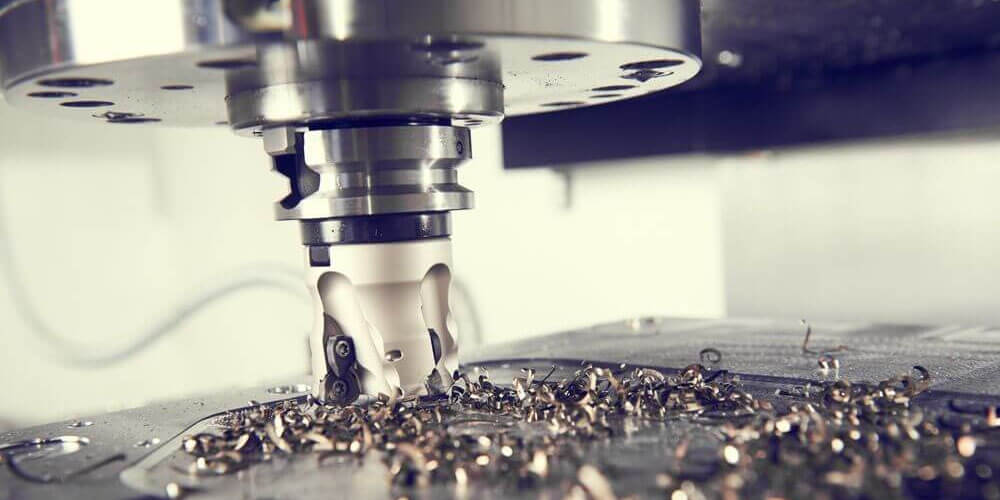
To get a better understanding, we would start with an explanation of what milling is. First, a CNC Machine is commonly made up of 3-axis- the X-axis, the Y-axis, and lastly the Z-axis.

The disadvantage of this setup is that it limits the geometry of the tools to be machined. However, this is not usually an issue because it is still suitable for most of the jobs which demand milling.

Different types of milling tools are used to achieve different results. The desired result may be face milling, end milling, or hollow milling. Whichever one it is, it can be achieved through CNC milling.

The less conventional types of milling machines are those with 4 axes or more. Sometimes it is called Multi-axis. Manufacturers prefer this type of milling machine because it is more flexible.

Not only are they more flexible, but they are also versatile as well. They can be used to make anything as long as it is possible to be manufactured with milling services.

If a block is milled, the area of the block before milling is usually larger than the area of the block after milling. Therefore Precision milling isn’t an impossible task in this instance. Tight tolerance also makes it quite easy to achieve a neat and smooth surface finish.

What is CNC Turning?

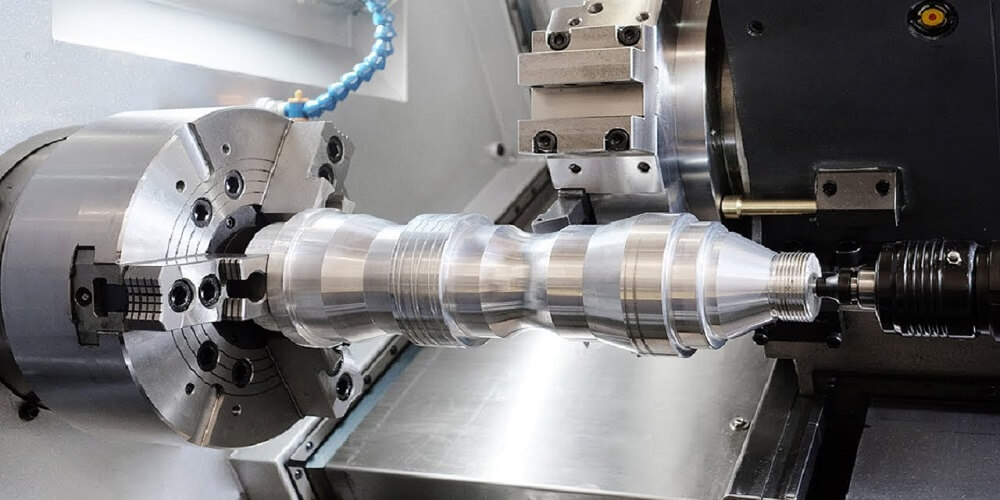
Basically, CNC Turning is used to produce cylindrical tools. These tools can either be custom hollow tubes, shafts, axially symmetric parts, or conical shapes.

Although cylindrical parts can also be made by a 5-axis milling machine, that of a turning machine is more effective. Another advantage it has over a milling machine is the lower hourly rate.

In a turning machine, the raw materials are usually attached to the Chunk. When the chuck rotates, it rotates alongside the spindle at a very high velocity.

The maximum velocity attained depends solely on the type of machinery. While some machines are capable of moving faster others cannot move beyond the set standard.

The turret is the point of attachment of the cutting tool. As the turret moves up and down across the workpiece, the cutting device is brought in close contact and cutting takes place.

Conclusion

One strong similarity between these two concepts is that they are both under the same broad term – CNC Machining. The activities of one compliment the activities of the other.

For instance, after a shaft is turned, the operator might decide to add more features using the CNC milling service.

The machine you choose to use will depend on the type of process of work you need completed.

April 12, 2021 0 comment
0 FacebookTwitterPinterestEmail
industry

Comparison between gravure and flexo printing

by Tyron March 16, 2021
written by Tyron

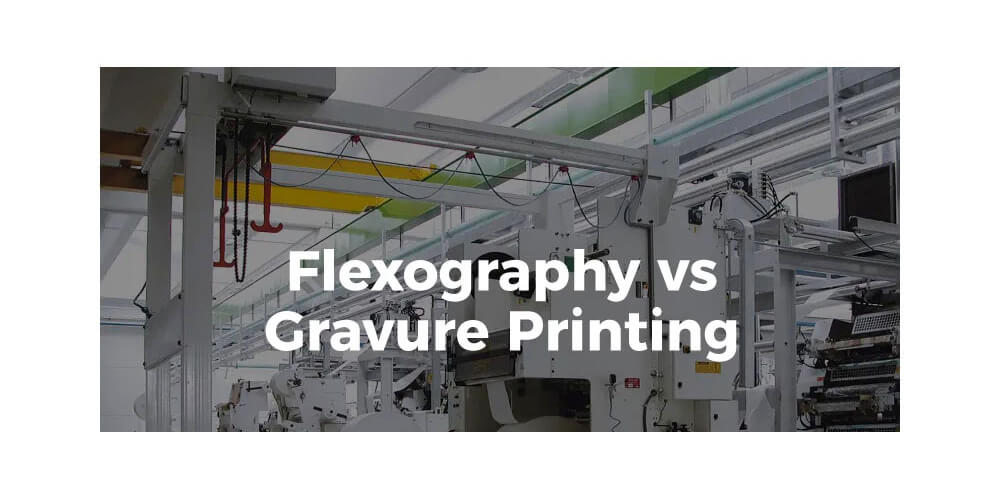
Gravure printing is an intaglio printing technique. Intaglio refers to a printing technique where the ink is laid on recessed parts of the intended printing form. In this method, an engraved cylinder with cells where ink is placed is used. At the beginning of the process, the cylinders are impressed with the intended image. The same process is also used in rotary printing. This technique is used for producing continuous tone images. Gravure printing equipment features five main parts: cylinder, ink fountain, doctor blades, impression roller, and dryer. Gravure printing is often compared to flexographic printing. In this post, we discuss similarities and differences between gravure and flexographic printing.

What is flexographic printing?

Flexographic printing is a relief printing technique often referred to as a modern version of letterpress printing. In this method, the ink is transferred to the substrate from a raised printing plate. Fast-drying inks are used, and the process can include a wide range of substrates.

Similarities between flexographic and gravure printing

Below are some significant similarities between gravure and flexo printing technologies;

  • Both techniques feature high production speeds. For instance, in flexo printing, the machines run at remarkably high speeds. On the other hand, gravure planting machinescan print continuous image tones at a fast rate. However, among the two, flexo printing is believed to be faster.
  • Both techniques produce high print quality. Gravure printingis known for making pieces with better ink laydown and consistent quality. Gravure printing also manufactures Flexo printing known to produce impeccable prints.
  • Both technologies involve the creation of printing sleeves or plates.

Differences between gravure and flexographic printing technologies

The two techniques feature some significant differences other than the definition and process. Below are some significant ones;

  • Gravure is the only high-speed printing technique that can print with high intricacy. In contrast, flexographic is used for more straightforward and less intricate prints. Regardless of such, they can both hold their own.
  • Gravure printing technologyis very costly. This is especially true during the process of replacing the cylinders. Note that the cylinders also have to be replaced after at least 18 months. The production costs of this printing method are also not as competitive. On the other hand, flexographic printing is one of the most cost-efficient printing methods. However, practitioners in the industry argue that the quality of the prints produced in gravure printing is worth the extra cost.
  • Another significant difference is that flexo printingdoes not produce the amount of color intensity that gravure printing does. Gravure printing employs the use of impression rollers, which help ensure color vibrancy.
  • Additionally, gravure printing is perfect for porous substrates hence the reason why it is used to make magazine covers. On the other hand, flexo printing can be used on both porous and non-porous substrates.
  • Gravure printing uses a limited number of inks. However, with flexo technology, the options are more.

Conclusion

Recently, following the increased consideration of sustainability, companies consider environmental impacts when choosing printing techniques. In this case, flexo takes the lead. However, when it comes to elements like quality and durability, gravure takes the lead.

March 16, 2021 0 comment
0 FacebookTwitterPinterestEmail
industry

Applications of CNC machining in various industries

by Tyron March 8, 2021
written by Tyron

CNC machining is a popular and highly used form of subtractive manufacturing. CNC machining can be divided into four primary stages. They are creating a CAD design, converting the CAD file to a CNC program, setting up and executing the operation. CNC machining parts are fundamental in the processes mentioned above. In this post, we discuss CNC machining applications.

Industries where CNC technology is applied

Below are some industries where CNC machining is applied;

1. Aerospace

In the Aerospace industry, CNC machining has been applied for a very long time. CNC machining technology is used in the manufacture of metal aircraft components. The technology is particularly essential for metal components that require a high level of precision. For instance, CNC machines are used to manufacture engine mounts, fuel flow components, and fuel access panels, to name a few.

2. Automotive

In the automotive industry, CNC machining is used for prototyping and production. Components like cylinder blocks, gearboxes, valves, and axels can be made from extruded metal using this production form. Using CNC technology, plastic materials can also be machined into a wide range of components like gas gauges and dashboard panels. Many practitioners in the automotive industry use CNC technology to make custom parts.

3. Oil and gas

In the oil and gas industry, CNC technology is used to make machine parts that fit well together and operate for a long time. Durability, accuracy, and strength of the parts are essential in this oil industry because oil machines operate for long periods.

Note, such factors are critical because they help prevent accidents, leakages, and inefficiency in production. Custom CNC machining is also applied in manufacturing oil and gas parts that need superior tolerance, dependability, and intricate detailing. Pins, rods, pistons, and drill bits are commonly manufactured using CNC manufacturing.

4. Military and defense

In this sector, flexible and reliable technologies are mandatory when manufacturing parts. They are required to ensure that the parts can withstand the harshest terrains. The government demands that the military and defense industry meet strict measures in production.

Therefore, practitioners in this sector invest in modern CNC machining solutions. Through custom CNC machining, large parts can get fashioned from various alloys and durable metals. This technology is used to produce electronics, plane parts, communication tools, and transportation components used in the military and defense sector.

5. Electronics

CNC machining is used to manufacture consumer electronics like laptops and smartphones. It is also used to create PCBs, fixtures, housings, and jigs, among other electronic components.

6. Medical

In the medical industry, CNC machining is used to make disposable surgical tools. Monitoring devices, MRI machine parts, implants, and orthotic devices, among several other components. CNC production is widely used in the medical industry because it manufactures highly precise tools at high speed. The technology also allows manufacturers to make several parts within minimal time.

Other industries where CNC machining is applied include;

  • The marine industry
  • Aviation industry

Conclusion

CNC machining is a modern and trendy method of subtractive production. Therefore, if you are looking to stay relevant, you need to know the technology. Acquiring this information shouldn’t be difficult because CNC machining is not as intricate as most people think.

March 8, 2021 0 comment
0 FacebookTwitterPinterestEmail
industry

Different Forging Process for different Companies

by Tyron March 1, 2021
written by Tyron

Introduction

Forging is a process adopted by many manufacturing companies for the reformation of metals and metal products. During this process, a metal is transformed from one shape to another. It can also be used to either reduce or increase the size of metal.

Different industries employ different types of forging process. The type of forging process a company will go with depends largely on the type of metal being forged. Each of these processes comes with its benefits and downsides.

This article is aimed to provide detailed information about these various forging processes. It contains an overview, main advantages, and common application of these processes.

Classification of Forging Process

Forging process are classified into 3 main types and they are:

1. Open Die Forging

This method involves applying force to a base material on both sides using two leveled dies. The material is continually hammered with full force until it is reshaped into the desired form.

One advantage of this process is that it can move sideways and can therefore accommodate more components. Also, unlike every other type of forging process, only a small amount of waste product is produced.

It is mostly utilized by the railway and aircraft manufacturing industries. That is how they make large components such as rollers and cylinders needed for their manufacturing processes.

2. Impression Die Forging

It is also called Close Die Forging. It has a lot in common with the Open Die Forging explained above. It is also used to reshape metal materials using leveled dice. But the difference here is that instead of partially enclosing the base materials like in the open die method, the base material is completely enclosed.

Additionally, impression die forging requires more force during compression to enable the die cavities to full completely. Another difference is that the sizes of forged parts are not the same on both occasions. Open Die forging normally produces bigger forged parts.

One advantage this process has over the others is that their tolerance is tighter and it has a high surface finishing which in the long run reduces the general cost of production.

This method is widely applicable in the oil and gas industries, mining, and automotive industries. In these industries, Impression die forging is used in the manufacture of flanges, fittings, and other engine parts.

3. Cold Forging

Sometimes metals can be forged even while they are cold. This type of forging process does not require the use of heat and they include cold drawing, extrusion, coining, bending, and cold heading. These methods are also used to resize and reshape metal materials.

The advantage of this process is that it results in high-quality surface finishing. It is also more affordable because materials for cold forging are cheaper and the process does not require heat.

Application of Cold forging is normally seen in automotive industries where it is used in the production of braking components, gears, steering and suspension components, pinions, and axles.

Conclusion

Summarily, for most industries especially those who specializes in the manufacture of metallic products, forging process remains an indispensable production process.

March 1, 2021 0 comment
0 FacebookTwitterPinterestEmail
industry

A Step By Step Guide on How to Melt Metal

by Tyron January 26, 2021
written by Tyron

Before melting metal, you must first understand that heat application is a necessity. You can either use a foundry such as a metal melting furnace or a torch to achieve this. If you use a foundry, rest assured that the metal can turn into a liquid in split seconds while you make it into any kind of shape you prefer. Torch, on the other hand, allows you to cut the metal into different shapes after melting through the metal. One thing is certain in the end – that you can successfully melt metals using either of the two aforementioned options.

In this piece, you will find out a step-by-step guide on how to effectively melt metal:

How to melt metal

As a first-timer, here’s an easy way that you can melt metal in the convenience of your home!

Step 1

You can make use of a steel bucket, preferably one that’s no longer in use. Create a pipe hole. The essence of the pipe hole is for the furnace to get supplies with adequate air. Also, create more holes close to the middle of the pot lid that will cover the furnace. This helps the gases to circulate better.

Step 2

Pack enough bricks and set them up. The bricks will serve as an external wall for your furnace. They will work to stabilize temperature and also protect the furnace. Unlike the crucible and every other object around, they won’t be too hot. If the bucket comes with no bottom, it’s more reason why you should consider using these bricks.

Step 3

Find a can or something else suitable to create a crucible. Ensure that the can you’re using us purely fit for this purpose.

Step 4 – this is the point where you create a blower. In some cases, people make use of a spoilt vacuum cleaner. This will suck up air and also blow it. Other people may also consider using a dryer but the old vacuum cleaner is seen as a better option (even though it may be too strong for a small furnace).

Step 5

To make fuel, you can use charcoal. This can be gotten from firewood as it’s the basic raw material. While melting the metal, you can add smaller sizes of coal. Coal is needed at some point because it burns better than regular charcoal. It boosts the temperature higher and allows a faster melting process.

Step 6

Finally, add the aluminum into the fire and heat it until it’s melted completely. The heat should be frequently increased. This is to ensure that no solid piece of aluminum is found in the crucible.

The process of melting metal can take between some minutes to hours; it all depends on the particular metal involved, its thickness/quantity, and the high the heat of your foundry is.

Conclusion

And that’s it! When the melting process is completed, the metal tends to turn into cherry red in some seconds. You may also find traces of impurities that are probably burning off.

January 26, 2021 0 comment
0 FacebookTwitterPinterestEmail
industry

The Industries that Benefit From CNC Milling

by Tyron January 22, 2021
written by Tyron

CNC milling is a cost-effective process that is applicable in many industries. When people set out to look for CNC milling, they usually are not concerned with the industries where the technology is applicable. However, even if you are only concerned about your industries, it is essential to be well-informed. Besides, they say information is power, and when you have it, nothing can stop you from achieving your objectives. Additionally, getting to understand cnc milling uses can make it possible for you to locate an ideal CNC milling provider.

Aerospace

CNC milling has a long history in the aerospace industry. One thing to understand about manufacturing a plane or other space crafts is that there is no room for mistakes. This means that a high level of precision is required and here is where CNC milling comes in. With CNC milling components used to make crafts are machined at a high level of precision to foster the safety levels.

Automotive

The CNC milling is typical in the automotive industry. The technology is used for both production and prototyping. Metals are machine into gearboxes, valves, cylinder blocks, axels, and other essential automotive industry components. In other words, if you want to invest in the automotive industry, then you need to understand that you will have to come across with CNC milling technology in one way or the other. Additionally, CNC is also essential in custom automotive parts because the turnaround time is fast.

Consumer Electronics

If you are in the electronic industry, there are high chances that you have once used CNC milling services. The production of consumer electronics, such as smartphones and laptops requires precise prototyping and production. Companies that excel in the electronic industry, such as Apple MacBook have heavily invested in the CNC milling. Therefore, if you are also in the electronic industry and want to take your business to the next level, you may want to look for the best CNC services provider.

Defence

The defence industry also relies on CNC milling to make their weapons. The production of guns, rugged and reliable parts heavily relies on CNC milling. While some of the production techniques might be different than other industries such as aerospace and electronics, the CNC milling can be designed to meet customer demands. Other industries that use CNC technology is the medical and the oil industry. The complexity of oil and gas mining requires that the tools used are sophisticated and designed to offer maximum safety standards.

Parting Shot

The application of the CNC milling cuts across numerous industry in the world. The manufacturing possibilities of this technology range from prototyping, production, tooling, and hybrid manufacturing. If you have realized that you need to embrace this technology for your business’s success, you need to ensure that you choose the best services provider.

Apart from leveraging Google for the information that will enable you to choose the best CNC milling company, there are other several factors that you may need to consider. They include the experience, track record, and the reputation of the CNC milling provider.

January 22, 2021 0 comment
0 FacebookTwitterPinterestEmail
industry

Why Are CNC Press Brakes Popular in Manufacturing

by Tyron January 21, 2021
written by Tyron

In the past decade, press brakes have made significant development steps; they have been advanced to be more time-saving and safer than before. The modern type is incorporated with the Computer Numerical Control (CNC), giving it the name cnc press brake; the following are benefits that arise from using the modernized press brakes:

Increased efficiency

The modern press brakes enable a manufacturing company to produce more bends in a short period than the past press brakes, which previously could produce a maximum of six hundred bends per hour.

The modern press brakes such as the CNC can produce about 900 bends in one hour; moreover, they can run until the operator stops them when changing tools to work on a different design. The tool changing process is done in one step on the screen and not manually like the traditional press brakes.

They are lighter and simpler not only during installation but also in speeding up the whole manufacturing process. The different various software designs incorporated on these modern press brakes make it easy to produce high quality and unique pieces.

Advanced technology

The current technology with the modern press brakes enables the production of many pieces faster; the Automatic Dynamic Crowning enables the metal sheet angles to be uniform or similar along the bend.

The past press brakes used the trial and error method to correct the angles, which means much time was spent on detecting the right angle as the first could rarely lead to the right angle. More on the modern press brakes is that the computer can quickly detect a tiny mistake on the metal bend and alert the operator with the preferable way of correcting the error.

The past press brakes consumed a lot of time as the sole designers were required to enter planned cuts to the press brake before making the bend to avoid mistakes that arise from the cut and the bend’s closeness.

Reduced training requirements

The modern press brakes require minimal and simpler training requirements, and it does not require long experiences for the mechanists. The past press brakes required lengthy training only for setting up the machine since the whole process was highly specialized and consumed a lot of time.

With the modern press brakes, you only need basic knowledge and understanding of common things because the CNC system is programmed to guide operators on the setup process, making it possible to do for anyone.

They are equipped with special features such as barcoding, enabling workers to scan all the press brake parts, making it easy for the operators to place the right pieces in the setup process and easily reorder the machine’s sequence if its need arises without doing any of these manually.

The improvements and advancements made on press brakes have made its operation simple, time-saving and cost-effective. Many of the costs that could have been used for training and employing more staff are reinvested or even used to improve the performance of their work. Moreover, even the newest people in the industry can efficiently use modern press brakes.

January 21, 2021 0 comment
0 FacebookTwitterPinterestEmail
Newer Posts
Older Posts

Recent Posts

  • How to Save Time and Stay Organized with the Best Label Maker
  • How to Identify Worn or Damaged Stump Grinder Pockets?
  • Exploring the Functionality of the 2023 Tundra Mud Flaps
  • Achieving Optimal Efficiency in Wood Chipping: A Deep Dive into Blade Selection and Maintenance
  • Why Choosing a Reliable Strapping Supplier is Key?

Recent Comments

    Copyright 2021. All Rights Reserved.


    Back To Top
    tfmindustrial.com
    • Home
    • Industry
    • about
    • Contact